

The LATAM Green Tech Business Opportunity: Why Your Business Can’t Afford to Wait
Last updated on August 24th, 2026 at 02:04 pm
For tech companies, Latin America offers a unique and time-sensitive Green Tech Business Opportunity that goes far beyond corporate social responsibility. The region is rapidly becoming a proving ground for sustainable innovation, driven by three powerful forces: surging consumer demand, proactive government incentives, and the undeniable advantage of being a first mover.
First, consumer behavior is shifting decisively. A recent study found that nearly 80% of consumers across Latin America are actively seeking products and brands that are both healthier and more sustainable . This isn’t a niche trend—it’s a mainstream expectation. For tech companies, this means integrating sustainability into your value proposition is no longer optional; it’s a direct path to customer acquisition and loyalty, making the Green Tech Business Opportunity a commercial imperative.
Second, governments across the region are actively creating a favorable environment for green innovation. Countries like Chile and Costa Rica are leading the way with strong policy frameworks and ambitious renewable energy targets . International bodies are also stepping in; for instance, the International Renewable Energy Agency (IRENA) has launched initiatives to accelerate financing for clean energy projects across Latin America, providing access to investment and risk-reduction instruments for qualifying projects . This policy momentum reduces the risk and increases the viability of green tech investments.
Finally, history shows that seizing a Green Tech Business Opportunity early provides a lasting advantage. As highlighted by the UN Conference on Trade and Development (UNCTAD), “At the beginning of a new technology wave, most countries are in a similar position. But early adopters move ahead fast and reap the advantages for longer” . In Latin America, where markets for green data centers are expanding at a remarkable pace, companies that establish themselves now as sustainable innovators will define market standards and build unassailable trust with both consumers and partners. Waiting is not just a missed opportunity—it’s a strategic risk.
Contents
Building a Smarter, Greener Future
In an era where climate change has shifted from a looming threat to a present-day crisis, the need for green technology and sustainable innovation is more urgent than ever. As cities expand, energy consumption soars, and natural resources dwindle, innovative solutions that prioritize environmental health and long-term resilience are not just welcome—they’re essential.
From carbon capture technologies to AI-powered environmental monitoring, and from eco-friendly materials to the rise of smart cities, this post explores the cutting-edge developments shaping the future of sustainability.
🌍 What Is Green Technology?
Green technology refers to eco-friendly innovations aimed at reducing negative environmental impact through sustainable design, materials, and processes. Sustainable innovation involves not only inventing new tools but rethinking systems with longevity, waste reduction, and regeneration in mind.
☀️ Innovations in Climate Tech & Clean Energy
- Perovskite solar cells offer higher efficiency at lower costs.
- Floating solar farms help optimize space in dense areas.
- Transparent panels allow energy generation from building windows.
- Floating offshore turbines provide access to stronger wind zones.
- AI and drones are enhancing turbine maintenance and uptime.
- Advancements in solid-state and lithium-ion batteries improve grid storage.
- Hydrogen energy is becoming viable for large-scale industrial applications.
- Direct air capture removes CO₂ directly from the atmosphere.
- CarbonCure and others infuse carbon into concrete, locking it away.
- BECCS methods combine biomass with carbon capture to create negative emissions.
🧠 AI-Powered Environmental Monitoring
AI and machine learning are playing a pivotal role in predicting and managing climate events:
- Predictive models for wildfires, floods, and droughts.
- Satellite-based AI monitors deforestation, air pollution, and glacier melt.
- Smart agriculture uses AI to optimize irrigation, soil health, and yield.
🧱 Eco-Friendly Materials & Circular Design
Examples include mushroom-based packaging, upcycled plastics, and construction materials made from ocean waste.
- Self-healing concrete that reduces long-term maintenance.
- Cool roofing and CLT (cross-laminated timber) reduce energy use.
Encourages reuse, repair, and recycling in manufacturing and product design.
🏙️ Smart City Technology & Sustainable Infrastructure
- Electric vehicles (EVs) and wide-scale charger infrastructure.
- Micromobility: scooters, e-bikes, and rideshare apps.
- Mobility-as-a-Service (MaaS) integrates multiple transport options in one platform.
- Automated energy systems that reduce waste
- Net Zero and LEED-certified structures with advanced monitoring.
- Smart bins and AI sorting facilities for better recycling.
- Waste-to-energy systems converting trash into usable power.
- Green rooftops, vertical gardens, and biodiversity corridors.
- Climate-adaptive landscaping that resists flooding and heat.

Green Tech Business Opportunities in Latin America
For tech companies, Latin America offers a unique and time-sensitive Green Tech Business Opportunity that goes far beyond corporate social responsibility.
The region is rapidly becoming a proving ground for sustainable innovation, driven by three powerful forces: surging consumer demand, proactive government incentives, and the undeniable advantage of being a first mover.
🌱 Shifting Consumer Behavior
A growing movement of rural entrepreneurs across the region is naturally thinking in terms of biomass, traceability, carbon capture, and circular economy, with over 1,100 innovative projects already demonstrating this new mindset.
For tech companies, integrating sustainability into your value proposition is no longer optional—it's a direct path to customer acquisition and loyalty, making the Green Tech Business Opportunity a commercial imperative.
🏛️ Proactive Government Incentives
Governments across the region are actively creating a favorable environment for green innovation. Countries like Chile and Costa Rica are leading the way with strong policy frameworks, including tax incentives for renewable energy, electromobility, the circular economy, and the bioeconomy.
In Chile, for example, new legislation promotes energy storage and offers accelerated depreciation for electric vehicles. This policy momentum reduces risk and increases the viability of green tech investments.
⚡ First-Mover Advantage
History shows that seizing a Green Tech Business Opportunity early provides a lasting advantage. Latin America holds 40% of global biodiversity and 57% of remaining primary forest, yet attracts less than 1% of climate tech venture funding.
With 65% of its electricity already from renewables and a 5–10x R&D talent cost advantage over the Global North, the region is perfectly positioned to lead in climate and nature solutions.
Companies that establish themselves now as sustainable innovators will define market standards and build unassailable trust. Waiting is not just a missed opportunity—it's a strategic risk.
Top 10 Smart Cities Leading the Green Tech Revolution – Green Tech Business Opportunity
In the 21st century, smart cities are no longer a vision of the future—they're reshaping how urban environments function today. Integrating green technology with data-driven urban planning is creating cleaner, more efficient, and more livable cities.
Below are the Top 10 smart cities that are leading the green tech revolution in 2025, driven by innovations in sustainability, innovative infrastructure, and eco-friendly policies.
Copenhagen is on track to become the world's first carbon-neutral capital by 2025. The city uses smart energy grids, promotes cycling over driving, and integrates AI-powered waste management systems.
Singapore uses advanced IoT sensors for traffic, pollution, and water management. Its Green Mark certification system ensures buildings meet sustainability goals, and the city continues to invest in vertical farming and desalination.
With electric boats, a circular economy model, and intelligent lighting systems, Amsterdam is a model for smart, sustainable living. The city promotes carbon-negative architecture and urban greening initiatives.
Stockholm employs an AI-driven public transportation system, clean energy from hydro and biofuels, and high recycling rates. It's ranked among the greenest and most connected cities globally.
Through digital twin models and AI-powered urban planning, Helsinki reduces energy waste. It also implements innovative heating systems and encourages public use of green apps to track CO₂ footprints.
Barcelona's innovative irrigation systems, urban greenery, and renewable energy policies place it at the forefront of green innovation. The city integrates sensor-based air quality management.
Oslo offers tax breaks on EVs, powers public transport with hydropower, and uses blockchain for transparent energy sharing. It's a model city for clean energy innovation.
Known for its commitment to clean tech, San Francisco integrates solar-powered public transit, zero-waste initiatives, and smart energy grids in both residential and commercial zones.
Seoul's smart city platform collects real-time data for urban sustainability. It includes energy-efficient buildings, AI-based flood control, and extensive EV charging infrastructure.
Dubai's Smart Dubai program includes solar-powered streetlights, AI-based environmental monitoring, and the development of self-sustaining smart districts like Sustainable City.
These smart cities demonstrate that sustainability and technology can co-exist. Through green innovation, data, and strategic governance, they're leading the global transition toward climate resilience. If you're interested in topics like eco-urbanism, smart energy systems, and AI in sustainability, these cities are the ultimate case studies.
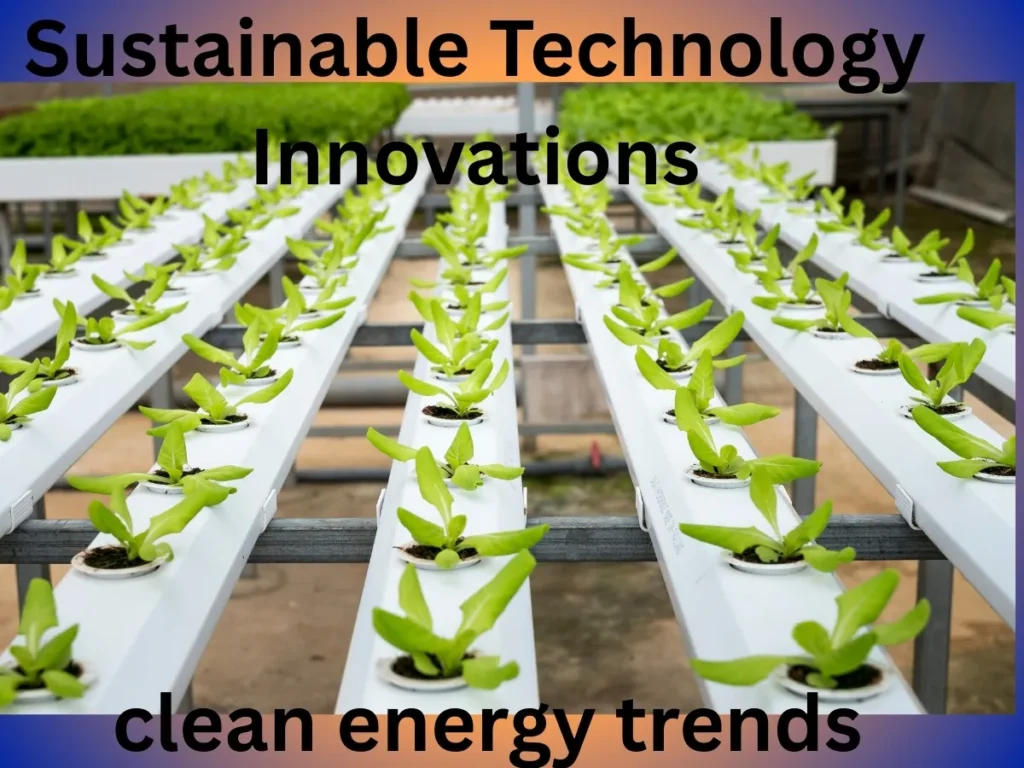
How Innovative Startups Are Unlocking Green Tech Business Opportunities in LATAM
Across Latin America, a new generation of innovative startups is turning the region's vast natural resources into scalable climate solutions, creating significant green tech business opportunities for investors and partners. With over 770 climate tech ventures now active, the ecosystem is maturing rapidly.
Uses AI-guided drones to disperse biodegradable seed capsules, restoring degraded ecosystems across Argentina, Bolivia, and Brazil.
Applies satellite technology and precision planting to restore Amazonian forests while cultivating profitable native species like cocoa and açaí.
Developed a modular, organic system to refine rare earth elements on-site at mines, aiming to cut emissions by over 70% and reduce foreign dependence.
These ventures are backed by a growing pool of regional and global investors, signaling a pivotal moment for green tech business opportunities in the region. While challenges remain, the combination of local innovation and fresh capital is building momentum that will likely define the next decade of sustainable development in Latin America.







One Comment